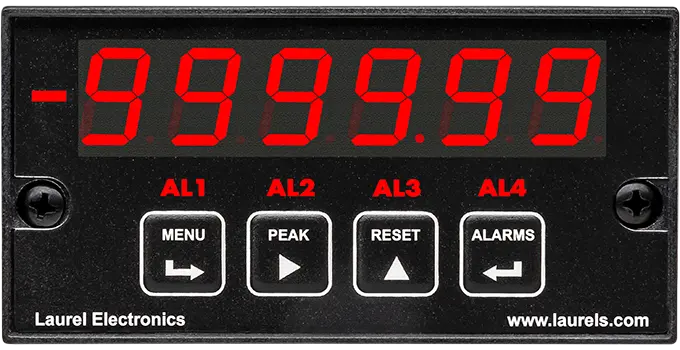
Understanding the Panel Meter for Time Interval Measurement
In technical fields and industrial environments where precise timing is essential, the ability to accurately measure and monitor time intervals directly impacts operational efficiency, process reliability, and overall safety. The Panel Meter for Time Interval is a compact, high-precision instrument engineered specifically to deliver exact time measurements with a clear digital readout. This Panel Meter is indispensable in applications that require reliable timing between events — from synchronizing automated machinery to recording intervals in scientific experiments and quality assurance processes. This overview explores its core functionality, standout features, technical advantages, and broad range of practical uses across modern industrial and research settings.
What is a 1/8 DIN Panel Meter?
A 1/8 DIN Panel Meter is a compact electronic instrument designed to process input signals and display measurement data in a clear digital format. The "1/8 DIN" designation refers to its standardized physical size, defined by the Deutsches Institut für Normung (DIN), a German standards organization. This size measures approximately 48 mm × 96 mm (1.89 inches × 3.78 inches) on the front panel, making it an excellent fit for control panels, instrumentation enclosures, and operator stations where space is limited but accurate data presentation is critical. The standardized dimensions ensure compatibility with existing panel cutouts, simplifying installation, upgrades, and replacements in both new and legacy systems.
This Panel Meter serves as a versatile tool for monitoring a variety of parameters — including voltage, current, temperature, frequency, and time intervals. Its digital display, typically featuring LED or LCD technology with adjustable brightness, provides high visibility and readability even in challenging lighting or from a distance. This makes the Panel Meter a dependable choice for operators who need quick, accurate data interpretation to support informed decision-making and process control.
What Does a Time Interval Panel Meter Do?
A Time Interval Panel Meter is built to measure the precise duration between two distinct events or signals with exceptional accuracy. Depending on the model, it can quantify time intervals in units ranging from nanoseconds to hours. This capability is vital in applications where exact timing is required — for example, synchronizing operations in automated systems, evaluating response times of electronic devices, or documenting durations in scientific research. By capturing the elapsed time between start and stop triggers, the Panel Meter helps optimize workflows, diagnose performance issues, ensure regulatory compliance, and improve overall process quality.
For instance, in high-speed manufacturing, the Panel Meter can measure cycle times to detect inefficiencies, while in laboratory testing it can record the exact duration of chemical reactions or physical events to support reproducible results and data validation. Its precision makes it a trusted tool for any application where timing accuracy directly affects outcomes.
How Does a 1/8 DIN Panel Meter for Time Interval Work?
The operation of the 1/8 DIN Panel Meter for Time Interval involves a carefully coordinated sequence of steps to deliver reliable and accurate measurements:
- Signal Acquisition
The Panel Meter receives timing signals from external sources — such as proximity sensors, limit switches, photoelectric sensors, push buttons, or electrical pulses — that mark the beginning and end of the interval to be measured. These inputs are typically TTL, CMOS, dry contact, or open-collector signals, ensuring broad compatibility with industrial equipment and control systems.
- High-Precision Time Processing
Internal timing circuitry — often driven by a stable quartz crystal oscillator or high-accuracy timebase — calculates the exact duration between the start and stop events. Advanced models apply sophisticated noise filtering, debounce logic, and edge detection to eliminate false triggers and ensure stable, repeatable results even in electrically noisy environments or when dealing with mechanical contacts.
- Digital Conversion & Processing
The measured time interval is converted into a digital value and processed by the Panel Meter's microcontroller. Scaling, unit conversion, and display formatting are applied to present the result in the desired units (seconds, milliseconds, microseconds, etc.) with the appropriate number of decimal places for the specific application.
- Display & Output Capabilities
The final value is shown on a bright, high-contrast digital display. Many models also provide programmable outputs — such as relays, open-collector transistors, analog signals (4–20 mA or 0–10 V), or communication interfaces (RS-232, RS-485, Modbus RTU/TCP, Ethernet) — to trigger external actions, log data, or integrate with PLCs, SCADA systems, or remote monitoring platforms.
Key Features of the 1/8 DIN Panel Meter for Time Interval
The 1/8 DIN Panel Meter for Time Interval includes a wide array of features that enhance its performance, usability, and integration capabilities:
- Exceptional Timing Accuracy
Offers resolution down to microseconds or nanoseconds and accuracy typically better than ±0.01%, depending on the internal clock source and calibration. This level of precision is essential for applications where even tiny timing variations can affect outcomes.
- Clear, High-Visibility Display
Features a large, backlit LED or LCD display with adjustable brightness and contrast, allowing easy reading in bright, dim, or variable lighting conditions commonly found in industrial and laboratory environments.
- Compact 1/8 DIN Form Factor
Fits standard panel cutouts, making it ideal for crowded control panels or retrofits without requiring major modifications to existing equipment layouts.
- Flexible Input Compatibility
Supports a broad range of trigger signals (TTL, CMOS, dry contact, open-collector, rising/falling edge) for easy connection to sensors, switches, PLCs, or other equipment. This flexibility simplifies integration into diverse systems.
- Programmable Functions
Allows users to configure measurement ranges, display units, alarm thresholds, relay actions, scaling factors, and output behaviors to match specific application requirements and operational workflows.
- Robust Industrial Design
Built to withstand harsh environments, with high IP front-panel protection, wide operating temperature range, and resistance to vibration, shock, dust, and electrical noise.
Benefits of Using a 1/8 DIN Panel Meter for Time Interval
Implementing a 1/8 DIN Panel Meter for Time Interval delivers numerous advantages across industrial and research applications:
- Enhanced Process Efficiency
Accurate timing data helps identify bottlenecks, optimize cycle times, and streamline operations, leading to higher throughput and lower production costs.
- Improved Accuracy & Repeatability
High-resolution measurements reduce errors in critical timing applications, ensuring consistent results and better quality control.
- Cost-Effective Monitoring
The compact design and versatile features eliminate the need for multiple specialized timers or counters, reducing hardware costs and panel space requirements.
- User-Friendly Operation
Intuitive interfaces, programmable settings, and clear digital displays make the Panel Meter accessible to operators with varying levels of technical expertise.
- Scalability & Future-Proofing
Easy integration with communication protocols and external systems supports expansion into larger automation networks or Industry 4.0 environments.
- Reliability in Harsh Conditions
Rugged construction ensures long-term performance in industrial settings with temperature extremes, vibration, dust, or electrical noise.
Technical Specifications (Typical)
Specifications vary by model, but a typical 1/8 DIN Panel Meter for Time Interval includes:
- Measurement Range: Nanoseconds to hours, with user-selectable scaling
- Accuracy: ±0.01% or better (depending on clock source)
- Input Types: TTL, CMOS, dry contact, open-collector, rising/falling edge
- Display: 4–6 digit LED or LCD with adjustable brightness
- Power Supply: 12–24 V DC or 85–265 V AC universal
- Communication: RS-232, RS-485, Modbus RTU/TCP, Ethernet (optional)
- Outputs: Relays, analog (4–20 mA or 0–10 V), open-collector
- Environmental Rating: IP65 front panel, wide operating temperature
Applications of the 1/8 DIN Panel Meter for Time Interval
The 1/8 DIN Panel Meter for Time Interval is used in numerous sectors where exact timing between events is critical:
- Industrial Automation & Robotics
Measures cycle times, dwell periods, and synchronization intervals in assembly lines, robotic cells, packaging machines, and material handling systems to optimize throughput and reduce waste. This Panel Meter is especially valuable in high-speed production where even small timing variations can affect product quality or machine performance.
- Testing & Quality Assurance
Evaluates response times of relays, solenoids, valves, and electronic components in R&D, production testing, and incoming inspection to ensure compliance with design specifications and industry standards.
- Laboratory & Scientific Research
Records precise intervals in chemical reactions, physical experiments, laser timing, spectroscopy, and biological assays to support reproducible results and data integrity. The Panel Meter's high resolution makes it ideal for time-sensitive scientific studies.
- Process Monitoring & Batch Control
Tracks durations between process steps (e.g., mixing, curing, drying, or filling) to maintain consistency, detect anomalies, and improve overall production quality in batch-oriented manufacturing.
- Telecommunications & Networking
Measures signal propagation delays, packet timing, and synchronization intervals to optimize network performance and troubleshoot latency issues in communication systems.
- Automotive & Aerospace Testing
Monitors timing in engine cycles, ignition events, actuator response, and flight control systems during development, testing, and maintenance to ensure safety and performance.
Conclusion
The 1/8 DIN Panel Meter for Time Interval is a compact, highly accurate, and versatile instrument that plays a critical role in modern industrial, laboratory, and research environments. Its ability to deliver precise digital readouts of time intervals, combined with robust construction, flexible inputs/outputs, and communication options, makes it an essential tool for optimizing processes, ensuring quality, and supporting innovation across diverse applications. Whether used in high-speed automation, scientific experimentation, or quality-critical testing, this Panel Meter provides reliable timing data that drives efficiency, safety, and performance.
Understanding the Panel Meter for Time Interval of Periodic Events
In industrial and technical applications where repetitive timing is a core requirement, the ability to measure and monitor periodic event intervals with precision is essential for process optimization and system reliability. The Panel Meter for Time Interval of Periodic Events is a compact, high-precision instrument designed to deliver accurate measurements of recurring time intervals with a clear digital readout. This Panel Meter is particularly valuable in applications involving cyclic or repeating processes — from machine cycle monitoring to flow rate analysis and signal period evaluation. This overview explores its functionality, features, technical advantages, and practical applications in modern industrial and research settings.
What is a 1/8 DIN Panel Meter?
A 1/8 DIN Panel Meter is a compact electronic instrument designed to process input signals and display measurement data in a clear digital format. The "1/8 DIN" designation refers to its standardized physical size, defined by the Deutsches Institut für Normung (DIN), a German standards organization. This size measures approximately 48 mm × 96 mm (1.89 inches × 3.78 inches) on the front panel, making it an excellent fit for control panels, instrumentation enclosures, and operator stations where space is limited but accurate data presentation is critical. The standardized dimensions ensure compatibility with existing panel cutouts, simplifying installation, upgrades, and replacements in both new and legacy systems.
This Panel Meter serves as a versatile tool for monitoring a variety of parameters — including voltage, current, temperature, frequency, and periodic time intervals. Its digital display, typically featuring LED or LCD technology with adjustable brightness, provides high visibility and readability even in challenging lighting or from a distance. This makes the Panel Meter a dependable choice for operators who need quick, accurate data interpretation to support informed decision-making and process control.
What Does a Periodic Event Interval Panel Meter Do?
A Periodic Event Interval Panel Meter is built to measure the precise duration of recurring cycles or intervals between repeating events with exceptional accuracy. Depending on the model, it can quantify periodic intervals in units ranging from microseconds to hours. This capability is vital in applications where consistent timing of repeating processes is required — for example, monitoring machine cycle times, evaluating signal periods, or analyzing flow rates in continuous operations. By capturing the elapsed time of each cycle, the Panel Meter helps optimize repetitive workflows, detect variations, ensure regulatory compliance, and improve overall process quality.
For instance, in continuous manufacturing, the Panel Meter can measure periodic cycle times to identify deviations, while in signal analysis it can record the exact period of oscillating waveforms to support equipment calibration and performance validation.
How Does a 1/8 DIN Panel Meter for Periodic Event Interval Work?
The operation of the 1/8 DIN Panel Meter for Periodic Event Interval involves a carefully coordinated sequence of steps to deliver reliable and accurate measurements:
- Signal Acquisition
The Panel Meter receives periodic timing signals from external sources — such as encoders, proximity sensors, flow meters, or electrical pulses — that mark the repeating events to be measured. These inputs are typically TTL, CMOS, dry contact, or open-collector signals, ensuring broad compatibility with industrial equipment and control systems.
- High-Precision Periodic Processing
Internal timing circuitry — often driven by a stable quartz crystal oscillator or high-accuracy timebase — calculates the duration of each recurring cycle. Advanced models apply sophisticated noise filtering, debounce logic, and edge detection to eliminate false triggers and ensure stable, repeatable results even in electrically noisy environments or with irregular signal patterns.
- Digital Conversion & Processing
The measured periodic interval is converted into a digital value and processed by the Panel Meter's microcontroller. Scaling, unit conversion, and display formatting are applied to present the result in the desired units (seconds, milliseconds, cycles per minute, etc.) with the appropriate number of decimal places for the specific application.
- Display & Output Capabilities
The final value is shown on a bright, high-contrast digital display. Many models also provide programmable outputs — such as relays, open-collector transistors, analog signals (4–20 mA or 0–10 V), or communication interfaces (RS-232, RS-485, Modbus RTU/TCP, Ethernet) — to trigger external actions, log data, or integrate with PLCs, SCADA systems, or remote monitoring platforms.
Key Features of the 1/8 DIN Panel Meter for Periodic Event Interval
The 1/8 DIN Panel Meter for Periodic Event Interval includes a wide array of features that enhance its performance, usability, and integration capabilities:
- Exceptional Periodic Timing Accuracy
Offers resolution down to microseconds and accuracy typically better than ±0.01%, depending on the internal clock source and calibration. This level of precision is essential for applications where consistent cycle timing directly affects process outcomes.
- Clear, High-Visibility Display
Features a large, backlit LED or LCD display with adjustable brightness and contrast, allowing easy reading in bright, dim, or variable lighting conditions commonly found in industrial and laboratory environments.
- Compact 1/8 DIN Form Factor
Fits standard panel cutouts, making it ideal for crowded control panels or retrofits without requiring major modifications to existing equipment layouts.
- Flexible Input Compatibility
Supports a broad range of periodic trigger signals (TTL, CMOS, dry contact, open-collector, rising/falling edge) for easy connection to sensors, switches, PLCs, or other equipment. This flexibility simplifies integration into diverse repetitive timing systems.
- Programmable Functions
Allows users to configure measurement ranges, display units, alarm thresholds, relay actions, scaling factors, and output behaviors to match specific application requirements and operational workflows.
- Robust Industrial Design
Built to withstand harsh environments, with high IP front-panel protection, wide operating temperature range, and resistance to vibration, shock, dust, and electrical noise.
Benefits of Using a 1/8 DIN Panel Meter for Periodic Event Interval
Implementing a 1/8 DIN Panel Meter for Periodic Event Interval delivers numerous advantages across industrial and research applications:
- Enhanced Process Consistency
Accurate periodic timing data helps maintain uniform cycle times, reduce variations, and streamline repetitive operations, leading to higher quality and lower waste.
- Improved Accuracy & Repeatability
High-resolution measurements reduce errors in critical periodic applications, ensuring consistent results and better process control.
- Cost-Effective Monitoring
The compact design and versatile features eliminate the need for multiple specialized timers or counters, reducing hardware costs and panel space requirements.
- User-Friendly Operation
Intuitive interfaces, programmable settings, and clear digital displays make the Panel Meter accessible to operators with varying levels of technical expertise.
- Scalability & Future-Proofing
Easy integration with communication protocols and external systems supports expansion into larger automation networks or Industry 4.0 environments.
- Reliability in Harsh Conditions
Rugged construction ensures long-term performance in industrial settings with temperature extremes, vibration, dust, or electrical noise.
Technical Specifications (Typical)
Specifications vary by model, but a typical 1/8 DIN Panel Meter for Periodic Event Interval includes:
- Measurement Range: Microseconds to hours, with user-selectable scaling
- Accuracy: ±0.01% or better (depending on clock source)
- Input Types: TTL, CMOS, dry contact, open-collector, rising/falling edge
- Display: 4–6 digit LED or LCD with adjustable brightness
- Power Supply: 12–24 V DC or 85–265 V AC universal
- Communication: RS-232, RS-485, Modbus RTU/TCP, Ethernet (optional)
- Outputs: Relays, analog (4–20 mA or 0–10 V), open-collector
- Environmental Rating: IP65 front panel, wide operating temperature
Applications of the 1/8 DIN Panel Meter for Periodic Event Interval
The 1/8 DIN Panel Meter for Periodic Event Interval is used in numerous sectors where exact timing of recurring events is critical:
- Industrial Automation & Robotics
Measures periodic cycle times, dwell periods, and synchronization intervals in assembly lines, robotic cells, packaging machines, and material handling systems to optimize throughput and reduce waste. This Panel Meter is especially valuable in high-speed production where even small timing variations can affect product quality or machine performance.
- Testing & Quality Assurance
Evaluates periodic response times of relays, solenoids, valves, and electronic components in R&D, production testing, and incoming inspection to ensure compliance with design specifications and industry standards.
- Laboratory & Scientific Research
Records precise periodic intervals in chemical reactions, physical experiments, oscillating systems, or biological assays to support reproducible results and data integrity. The Panel Meter's high resolution makes it ideal for time-sensitive scientific studies.
- Process Monitoring & Batch Control
Tracks durations of recurring process steps (e.g., mixing, curing, drying, or pulsing) to maintain consistency, detect anomalies, and improve overall production quality in continuous or cyclic manufacturing.
- Telecommunications & Networking
Measures periodic signal intervals, clock cycles, or synchronization periods to optimize network performance and troubleshoot timing issues in communication systems.
- Automotive & Aerospace Testing
Monitors periodic timing in engine cycles, ignition events, actuator response, or vibration patterns during development, testing, and maintenance to ensure safety and performance.
Conclusion
The 1/8 DIN Panel Meter for Periodic Event Interval is a compact, highly accurate, and versatile instrument that plays a critical role in modern industrial, laboratory, and research environments. Its ability to deliver precise digital readouts of recurring time intervals, combined with robust construction, flexible inputs/outputs, and communication options, makes it an essential tool for optimizing cyclic processes, ensuring quality, and supporting innovation across diverse applications. Whether used in high-speed automation, scientific experimentation, or quality-critical testing, this Panel Meter provides reliable periodic timing data that drives efficiency, safety, and performance.
Understanding the Panel Meter for Duty Cycle and Pulse Width Modulation (PWM)
In electronics, automation, and control systems, accurate measurement and real-time monitoring of signal characteristics are vital for system efficiency, reliability, and performance. The Panel Meter for Duty Cycle and Pulse Width Modulation (PWM) is a specialized instrument designed to precisely measure, analyze, and display the essential parameters of PWM signals. These signals are foundational in applications such as motor speed control, power regulation, LED dimming, and signal modulation. By delivering detailed insights into duty cycle, pulse width, and frequency, this Panel Meter empowers operators and engineers to fine-tune systems, diagnose faults, and achieve optimal operation. This section provides a thorough examination of its operation, features, advantages, specifications, and diverse applications in contemporary industrial and technical environments.
What is a Panel Meter?
A Panel Meter is an electronic measurement device that processes input signals and presents data in a clear digital or analog format. It is commonly installed in control panels, test equipment, and monitoring stations to offer precise readouts of parameters like voltage, current, frequency, or specialized metrics such as duty cycle and pulse width in PWM signals. The Panel Meter typically includes a high-visibility display — often LED or LCD with adjustable brightness — ensuring readability in various lighting conditions. Its design prioritizes accuracy, durability, and seamless integration, making it a reliable tool for operators who require immediate, trustworthy data to guide decisions and maintain system control.
Duty Cycle and PWM Fundamentals
To appreciate the value of this Panel Meter, it is helpful to review the core concepts of duty cycle and Pulse Width Modulation (PWM):
- Duty Cycle: This represents the percentage of time a signal remains in its active ("on") state during one complete cycle. For example, a 60% duty cycle means the signal is active for 60% of the cycle and inactive for 40%. This metric is key to controlling average power delivery and efficiency in electronic circuits.
- Pulse Width Modulation (PWM): PWM is a digital technique that encodes analog information by varying the duration of pulses in a periodic signal while keeping frequency constant. It is widely used to regulate power to loads like motors or lights by adjusting the duty cycle. PWM signals are defined by their frequency (cycles per second), duty cycle, and pulse width, all of which influence system behavior and energy use.
How Does a Panel Meter for Duty Cycle and PWM Work?
This Panel Meter is engineered to capture, process, and display PWM signal characteristics through a systematic and reliable sequence:
- Signal Input and Acquisition
The Panel Meter accepts PWM signals from controllers, sensors, or circuits via compatible inputs, such as voltage, current, or digital pulse lines.
- Duty Cycle Calculation
It computes the ratio of "on" time to the total cycle time, converting this into a precise percentage that reflects the signal's active portion.
- Pulse Width Measurement
The Panel Meter determines the duration of high and low pulses, providing critical timing data for applications needing exact pulse control.
- Frequency Detection
Many models also measure the signal frequency, indicating cycles per second, which affects smoothness in motor control or dimming applications.
- Display and Output Processing
Processed data is shown on a digital screen with customizable formats. Programmable outputs — including alarms, relays, or communication interfaces (RS-485, Modbus, Ethernet) — enable integration with automation systems for alerts, logging, or control actions.
Key Features of the Panel Meter for Duty Cycle and PWM
The Panel Meter for Duty Cycle and PWM incorporates a range of features that boost its performance and adaptability:
- High Measurement Accuracy
Delivers precise readings with minimal error, essential for applications where small variations in duty cycle or pulse width can impact results.
- Real-Time Monitoring Capabilities
Provides continuous, instantaneous updates, allowing immediate system adjustments and rapid response to signal changes.
- Compact and Standardized Design
Often built to the 1/8 DIN standard (96mm x 48mm), the Panel Meter integrates easily into space-constrained panels while maintaining full functionality.
- Broad Application Versatility
Handles low-frequency motor drives to high-frequency signal processing, adapting to diverse industrial and technical needs.
- Programmable Configuration Options
Includes customizable settings for display units, scaling, alarm thresholds, and measurement parameters to fit specific operational scenarios.
- Durable Industrial Build
Constructed to endure harsh conditions, with features like IP-rated enclosures for protection against dust, moisture, vibration, and temperature extremes.
Benefits of Using a Panel Meter for Duty Cycle and PWM
Deploying this Panel Meter in systems yields several key advantages:
- Superior System Control
Precise PWM measurements enable fine-tuned regulation, enhancing energy efficiency and overall performance.
- Faster Troubleshooting
Real-time data reveals signal irregularities quickly, minimizing downtime and repair expenses.
- Energy and Cost Savings
Optimized PWM signals reduce power consumption and extend component lifespan.
- Intuitive Operation
Clear displays and straightforward controls lower training requirements for operators.
- Future-Ready Scalability
Seamless integration with communication protocols supports expansion into advanced automation or Industry 4.0 setups.
Technical Specifications (Typical)
Specifications vary by model, but a typical Panel Meter for Duty Cycle and PWM includes:
- Measurement Range: Duty cycle 0–100%, pulse width microseconds to seconds, frequency up to several kHz
- Accuracy: ±0.1% or better for duty cycle and frequency
- Input Types: TTL, CMOS, analog voltage, or digital pulse
- Display: 4–6 digit LED or LCD with backlighting and configurable decimals
- Power Supply: 12–24 V DC or 85–265 V AC universal
- Communication: RS-232, RS-485, Modbus RTU/TCP, Ethernet (optional)
- Outputs: Relays, analog (4–20 mA or 0–10 V), open-collector
- Environmental Rating: IP65 front panel, wide temperature operation
Applications of the Panel Meter for Duty Cycle and PWM
The Panel Meter for Duty Cycle and PWM is applied in numerous settings where precise signal management is required:
- Motor Speed and Torque Control
Regulates PWM signals to achieve desired speeds in DC motors, stepper motors, or servos used in industrial machinery and robotics.
- Power Supply and Voltage Regulation
Monitors PWM in switch-mode power supplies to maintain stable output in electronics and computing equipment.
- LED and Lighting Dimming
Controls brightness through PWM duty cycle adjustments in architectural, automotive, or display lighting systems.
- Heating Element Control
Manages PWM for proportional heating in industrial ovens, HVAC, or process equipment.
- Signal Testing and Development
Verifies PWM integrity in electronic circuits, communication devices, and control prototypes during R&D and quality testing.
Where Is a Panel Meter for Duty Cycle and Pulse Width Modulation (PWM) Used?
A Panel Meter for Duty Cycle and Pulse Width Modulation (PWM) is an essential device in environments where accurate analysis of PWM signals is needed to ensure optimal system performance. Its ability to measure and display duty cycle, pulse width, and frequency makes it a key tool in industrial, commercial, research, and development settings. Below is a detailed overview of the primary industries and specific applications where this Panel Meter is deployed.
1. Industrial Automation
In industrial automation, the Panel Meter plays a crucial role in maintaining precise control over automated processes. It is used to:
- Motor Control Systems: Monitors PWM signals to regulate speed and torque in motors for conveyor belts, robotic arms, and assembly lines, ensuring smooth and efficient operations.
- Process Synchronization: Analyzes PWM inputs for actuators, valves, and sensors, enabling precise timing and coordination in manufacturing processes like packaging or material handling.
- Robotics and Motion Control: Adjusts PWM parameters for servo motors, enhancing accuracy in robotic movements and tasks.
2. Electronics Testing and Development
In electronics design and testing, the Panel Meter aids in signal verification and optimization. Applications include:
- Circuit Validation: Measures duty cycle and pulse width to validate circuit designs, ensuring components function as intended.
- Prototype Tuning: Supports PWM adjustment during product development, allowing engineers to refine prototypes for better performance and efficiency.
- Signal Debugging: Identifies anomalies in PWM signals, facilitating quick troubleshooting in electronic systems and reducing development time.
3. Communication Systems
In communication and signal processing systems, PWM is used for modulation, and the Panel Meter ensures signal quality. It is applied in:
- Data Encoding: Monitors PWM signals to maintain accurate data transmission in telecommunications equipment.
- Signal Integrity Checks: Tracks duty cycle variations to prevent distortion or interference in wireless or wired networks.
- RF and Modulation Applications: Analyzes PWM in radio frequency systems for precise control of signal strength and modulation depth.
4. Automotive Applications
In the automotive sector, PWM controls various vehicle systems, and the Panel Meter supports performance optimization. It is used in:
- Engine and Powertrain Management: Regulates PWM signals for fuel injectors, ignition timing, and throttle controls to improve efficiency and reduce emissions.
- Lighting Systems: Manages PWM for LED headlights, taillights, and interior lighting, ensuring consistent brightness and energy savings.
- Electric and Hybrid Vehicles: Monitors PWM in battery management and motor drives for optimal power distribution and range.
5. Consumer Electronics
In consumer electronics, the Panel Meter ensures reliable operation of PWM-based devices. It is utilized in:
- Power Supply Testing: Calibrates switch-mode power supplies using PWM for stable output in devices like chargers or laptops.
- Appliance Control: Analyzes PWM signals in appliances such as washing machines or microwaves to control motors and heating elements.
- Audio and Display Systems: Adjusts PWM for amplifier control or screen brightness, enhancing sound quality and visual performance.
6. Renewable Energy Systems
In renewable energy, PWM is key to power conversion, and the Panel Meter optimizes these processes. Applications include:
- Solar Power Inverters: Measures PWM signals to maximize energy harvest from solar panels by adjusting power output.
- Wind Turbine Generators: Monitors PWM in power electronics for efficient energy conversion and grid integration.
- Battery Charging Controllers: Controls PWM for charging systems, ensuring safe and efficient energy storage in off-grid setups.
Conclusion
A Panel Meter for Duty Cycle and Pulse Width Modulation is a versatile and indispensable tool in industries ranging from industrial automation and electronics to automotive, consumer products, communications, and renewable energy. By offering precise measurements of PWM signal parameters, it ensures reliable operation, boosts efficiency, and drives innovation in control and monitoring systems. Its adaptability, accuracy, and integration capabilities make it a fundamental component in advancing technology and optimizing performance across these sectors.
Understanding the 1/8 DIN Serial Input 6-Digit Panel Meter & Remote Display
In industrial automation, process control, and instrumentation, the ability to monitor and display data with precision is essential for operational efficiency, safety, and reliability. The 1/8 DIN Serial Input 6-Digit Panel Meter & Remote Display is a compact, high-precision instrument designed to receive data via serial communication and present it with exceptional clarity on a 6-digit display. This Panel Meter is particularly valuable in applications requiring accurate, real-time data visualization and the flexibility of remote monitoring. This overview explores its functionality, key features, technical advantages, and wide-ranging applications across modern industrial, commercial, and research environments.
What is a 1/8 DIN Panel Meter?
A 1/8 DIN Panel Meter is a compact electronic instrument designed to process input signals and display measurement data in a clear digital format. The "1/8 DIN" designation refers to its standardized physical size, defined by the Deutsches Institut für Normung (DIN), a German standards organization. This size measures approximately 48 mm × 96 mm (1.89 inches × 3.78 inches) on the front panel, making it an excellent fit for control panels, instrumentation enclosures, and operator stations where space is limited but accurate data presentation is critical. The standardized dimensions ensure compatibility with existing panel cutouts, simplifying installation, upgrades, and replacements in both new and legacy systems.
This Panel Meter serves as a versatile tool for monitoring a variety of parameters — including voltage, current, temperature, frequency, or serial-transmitted values. Its digital display, typically featuring LED or LCD technology with adjustable brightness, provides high visibility and readability even in challenging lighting or from a distance. This makes the Panel Meter a dependable choice for operators who need quick, accurate data interpretation to support informed decision-making and process control.
What Does a Serial Input 6-Digit Panel Meter Do?
A Serial Input 6-Digit Panel Meter is built to receive numerical data through serial communication protocols (such as RS-232, RS-485, or Modbus) and display it with high resolution on a 6-digit screen. This capability is vital in applications where data originates from remote devices, PLCs, sensors, or control systems, allowing centralized or distributed monitoring. The 6-digit display provides detailed readouts capable of showing values with fine precision, while the remote display feature transmits data to secondary locations for safe or convenient viewing.
For instance, in a large manufacturing facility, the Panel Meter can receive process data from a PLC and display it locally, while simultaneously sending the same information to a control room display, enabling operators to monitor conditions without being on the factory floor.
How Does a 1/8 DIN Serial Input 6-Digit Panel Meter Work?
The operation of the 1/8 DIN Serial Input 6-Digit Panel Meter involves a carefully coordinated sequence of steps to deliver reliable and accurate data presentation:
- Data Acquisition via Serial Input
The Panel Meter receives data streams from external devices — such as PLCs, sensors, transducers, or industrial controllers — through standard serial interfaces. These inputs support common protocols like RS-232, RS-485, Modbus RTU/TCP, or Ethernet, ensuring broad compatibility with modern automation equipment.
- Data Processing & Decoding
Internal circuitry decodes the incoming serial data, applying scaling, unit conversion, filtering, or formatting as needed to produce meaningful numerical values. Advanced models include error checking and noise rejection to maintain data integrity even in electrically noisy environments.
- Digital Conversion & Display
The processed data is converted into a high-resolution digital value and presented on a bright, 6-digit LED or LCD screen. Users can customize decimal places, engineering units, display brightness, and even color options for optimal readability in different conditions.
- Remote Display & Output Capabilities
The Panel Meter can transmit the displayed data to remote units via wired or wireless connections. Programmable outputs — such as relays, open-collector transistors, analog signals (4–20 mA or 0–10 V), or additional communication ports — enable integration with alarm systems, data loggers, SCADA platforms, or secondary displays for centralized monitoring.
Key Features of the 1/8 DIN Serial Input 6-Digit Panel Meter
The 1/8 DIN Serial Input 6-Digit Panel Meter includes a wide array of features that enhance its performance, usability, and integration capabilities:
- Exceptional Display Resolution
Offers a 6-digit readout for detailed numerical presentation, capable of showing values with high precision and multiple decimal places when required.
- Clear, High-Visibility Display
Features a large, backlit LED or LCD display with adjustable brightness and contrast, allowing easy reading in bright, dim, or variable lighting conditions commonly found in industrial and laboratory environments.
- Compact 1/8 DIN Form Factor
Fits standard panel cutouts, making it ideal for crowded control panels or retrofits without requiring major modifications to existing equipment layouts.
- Flexible Serial Communication
Supports industry-standard protocols (RS-232, RS-485, Modbus RTU/TCP, Ethernet) for seamless connection to PLCs, sensors, computers, or distributed control systems.
- Programmable Functions
Allows users to configure scaling, display units, alarm thresholds, relay actions, data formatting, and output behaviors to match specific application requirements and operational workflows.
- Robust Industrial Design
Built to withstand harsh environments, with high IP front-panel protection, wide operating temperature range, and resistance to vibration, shock, dust, and electrical noise.
Benefits of Using a 1/8 DIN Serial Input 6-Digit Panel Meter
Implementing a 1/8 DIN Serial Input 6-Digit Panel Meter delivers numerous advantages across industrial and research applications:
- Enhanced Data Visibility
High-resolution displays and serial connectivity provide accurate, real-time information for informed decision-making and rapid response to process changes.
- Space-Efficient Design
The compact 1/8 DIN size optimizes panel space, reducing installation costs and complexity in crowded control environments.
- Versatile Integration
Compatible with a wide range of devices and protocols, from legacy sensors to modern IoT platforms, ensuring future-proof scalability.
- Improved Safety & Accessibility
Remote display capabilities enable monitoring in hazardous or inaccessible areas, reducing operator exposure to risks.
- Cost-Effective Solution
Combines multiple functions (display, communication, alarms) into a single device, lowering hardware and maintenance expenses.
- Reliability in Demanding Conditions
Rugged construction ensures long-term performance in industrial settings with temperature extremes, vibration, dust, or electrical noise.
Technical Specifications (Typical)
Specifications vary by model, but a typical 1/8 DIN Serial Input 6-Digit Panel Meter includes:
- Display: 6-digit LED or LCD with adjustable brightness and color options
- Input Protocols: RS-232, RS-485, Modbus RTU/TCP, Ethernet
- Accuracy: ±0.01% or better for numerical data
- Power Supply: 12–24 V DC or 85–265 V AC universal
- Outputs: Programmable alarms, relays, analog (4–20 mA or 0–10 V)
- Environmental Rating: IP65 front panel, wide temperature operation
Applications of the 1/8 DIN Serial Input 6-Digit Panel Meter
The 1/8 DIN Serial Input 6-Digit Panel Meter is used in numerous sectors where exact data presentation and remote monitoring are critical:
- Industrial Process Monitoring
Displays real-time data for temperature, pressure, flow, or level in food processing, chemical manufacturing, and pharmaceutical production to maintain process control and product quality.
- Manufacturing Automation
Tracks production counts, machine speeds, or sensor values in assembly lines and robotic systems, enabling precise control and quality assurance.
- Energy Management
Monitors power consumption, voltage, or current in factories, data centers, and commercial buildings to optimize energy use and reduce costs.
- Laboratory & Scientific Research
Provides precise readouts for experimental data in physics, chemistry, or materials science, supporting accurate analysis and reproducible results.
- Building Management Systems
Tracks environmental parameters like temperature, humidity, or air quality to maintain efficient and comfortable building operations.
- Water & Wastewater Treatment
Displays flow rates, chemical dosing, or level data to ensure compliance with regulatory standards and efficient treatment processes.
Conclusion
The 1/8 DIN Serial Input 6-Digit Panel Meter & Remote Display is a powerful, efficient, and versatile tool for modern industrial and scientific applications. Its compact size, high-resolution display, and flexible serial connectivity ensure reliable data visualization, while the remote display feature enhances safety and accessibility in challenging environments. As industries continue to embrace automation and data-driven decision-making, this Panel Meter remains a vital instrument for optimizing performance, ensuring safety, and driving innovation across diverse sectors.
Less Information...