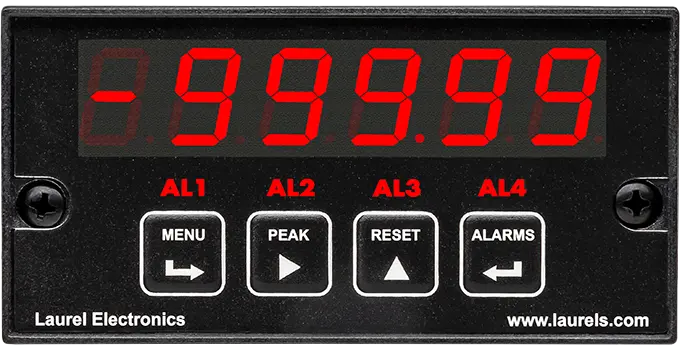
Analog Digital Panel Meters - Precision Measurement Solutions
What are Analog Digital Panel Meters?
Analog Digital Panel Meters are specialized measurement instruments designed to receive analog input signals and display them in digital format. These Digital Panel Meters accept continuous analog signals from sensors, transducers, and measurement devices, converting them into precise digital readings displayed on LED or LCD screens. The term "analog" refers to the input signal type, while "digital" describes the display format, combining the flexibility of analog signal processing with the clarity and precision of digital readouts.
1/8 DIN Analog Digital Panel Meters represent the industry standard size (96mm x 48mm), offering compact solutions that fit seamlessly into control panels, equipment enclosures, and instrumentation racks. These Digital Panel Meters serve as critical interfaces between analog sensing devices and human operators or control systems, translating raw electrical signals into meaningful engineering units.
How Analog Digital Panel Meters Function
The operational principle of Analog Digital Panel Meters involves several key stages:
- Analog Signal Reception: Digital Panel Meters receive continuous analog signals in various forms including DC voltage (0-10V, 0-5V), DC current (4-20mA, 0-20mA), AC voltage, AC current, resistance (RTD), or thermocouple millivolt signals. Input conditioning circuitry scales and prepares these signals for accurate measurement.
- Signal Processing and Conditioning: Internal circuitry within the Digital Panel Meters performs critical signal conditioning including amplification of weak signals, filtering to remove electrical noise, linearization for non-linear sensor outputs, and cold junction compensation for thermocouple inputs. This processing ensures measurement accuracy across varying environmental conditions.
- Analog-to-Digital Conversion: High-resolution analog-to-digital converters (ADCs) within the Digital Panel Meters transform conditioned analog signals into digital values. Modern Digital Panel Meters employ 16-bit or higher resolution ADCs, enabling them to resolve small signal changes and provide precise measurements.
- Digital Display and Output: Processed digital values appear on bright, easy-to-read displays. The Digital Panel Meters can show measurements in various engineering units with user-selectable decimal point positions. Many Digital Panel Meters also provide analog retransmission outputs, allowing measured values to be sent to PLCs, chart recorders, or other monitoring systems.
1/8 DIN Analog Digital Panel Meters for DC Voltage Input
DC Voltage Measurement Capabilities
DC voltage input Digital Panel Meters are designed to measure and display direct current voltage signals from power supplies, battery systems, sensors, and control circuits. These Digital Panel Meters typically accept standard voltage ranges including 0-200mV, 0-2V, 0-20V, 0-200V, and 0-600V, with many models offering user-programmable custom ranges.
Key Applications
- Battery Monitoring Systems: Digital Panel Meters track battery bank voltage in backup power systems, telecommunications facilities, and renewable energy installations. Continuous voltage monitoring prevents over-discharge and ensures batteries remain within safe operating parameters.
- Power Supply Verification: In electronic equipment manufacturing and testing, these Digital Panel Meters verify power supply output voltages, ensuring proper operation of circuits and components. They provide immediate visual confirmation of voltage levels during equipment commissioning and troubleshooting.
- Solar Panel Monitoring: Photovoltaic system installers and operators use Digital Panel Meters to monitor solar panel output voltage, tracking performance and identifying underperforming panels or arrays that may require maintenance.
- Process Control Systems: Many industrial sensors and transducers output voltage signals proportional to measured parameters. Digital Panel Meters convert these voltage signals into meaningful engineering units, displaying temperature, pressure, level, or other process variables.
- Automotive Testing: In vehicle electrical system testing and diagnostic applications, Digital Panel Meters measure battery voltage, alternator output, and various sensor voltages, helping technicians diagnose electrical problems.
1/8 DIN Analog Digital Panel Meters for DC Current Input
DC Current Measurement Technology
DC current input Digital Panel Meters measure direct current flow in electrical circuits and systems. These Digital Panel Meters commonly measure 4-20mA process signals, motor currents, battery charge/discharge currents, and other DC current parameters. Most Digital Panel Meters accept current inputs through precision shunt resistors or current transformers, converting current to voltage for measurement.
Primary Applications
- 4-20mA Process Loop Monitoring: Industrial process instrumentation extensively uses 4-20mA current loops for transmitting measurement data. Digital Panel Meters display these current signals or scale them to show the actual process variable (temperature, pressure, flow, level), providing operators with real-time process information.
- Motor Current Monitoring: In motor control applications, Digital Panel Meters monitor motor current to detect overload conditions, bearing failures, or mechanical binding. Trending current over time helps predict maintenance needs before motor failures occur.
- Battery Charging Systems: Battery charging operations require precise current monitoring to ensure proper charge rates and prevent battery damage. Digital Panel Meters display charge and discharge currents, helping operators optimize battery charging profiles.
- Electroplating Operations: Electroplating and metal finishing processes depend on precise current control for proper plating thickness and quality. Digital Panel Meters monitor plating current, ensuring consistent results and quality control.
- Welding Equipment: Welding current monitoring ensures proper weld penetration and quality. Digital Panel Meters provide welders with real-time current feedback, helping maintain consistent welding parameters.
1/8 DIN Analog Digital Panel Meters for AC Voltage Input
AC Voltage Measurement Features
AC voltage input Digital Panel Meters measure alternating current voltage in power distribution systems, motor drives, and electrical equipment. True RMS (Root Mean Square) measuring Digital Panel Meters accurately measure distorted waveforms from variable frequency drives and non-linear loads, while average-responding Digital Panel Meters work well for clean sinusoidal waveforms.
Application Areas
- Power Distribution Monitoring: Electrical panels, switchgear, and distribution boards use Digital Panel Meters to monitor incoming line voltage, ensuring stable power supply and detecting voltage sags, swells, or outages that could affect equipment operation.
- Generator Output Verification: Standby generators and emergency power systems require voltage monitoring to verify proper output voltage and frequency. Digital Panel Meters provide operators with immediate feedback during generator startup and operation.
- Transformer Monitoring: Primary and secondary voltage monitoring on transformers helps verify proper transformer operation and loading. Digital Panel Meters detect voltage imbalances or abnormal conditions requiring investigation.
- Motor Control Centers: Variable frequency drives and soft starters require voltage monitoring to ensure proper motor operation. Digital Panel Meters display input and output voltages, helping troubleshoot drive problems and verify correct motor voltages.
- Renewable Energy Systems: Solar inverters and wind turbine converters output AC voltage to the grid. Digital Panel Meters monitor inverter output voltage, ensuring grid compliance and proper system operation.
1/8 DIN Analog Digital Panel Meters for AC Current Input
AC Current Monitoring Capabilities
AC current input Digital Panel Meters measure alternating current in motors, transformers, and electrical distribution systems. These Digital Panel Meters typically work with current transformers (CTs) that step down large currents to safe, measurable levels. True RMS Digital Panel Meters accurately measure distorted current waveforms from non-linear loads.
Key Applications
- Motor Load Monitoring: Manufacturing facilities use Digital Panel Meters to monitor three-phase motor currents, detecting overload conditions, phase imbalances, or bearing problems before motor failures occur. Continuous current monitoring enables predictive maintenance strategies.
- Circuit Breaker Panel Monitoring: Electrical distribution panels incorporate Digital Panel Meters to monitor branch circuit currents, preventing overloading and ensuring balanced loading across phases. This helps maintain electrical system reliability and efficiency.
- Pump and Compressor Monitoring: HVAC systems, water treatment plants, and industrial facilities monitor pump and compressor motor currents to detect cavitation, bearing wear, or mechanical binding. Digital Panel Meters provide early warning of developing problems.
- Energy Management: Facilities implementing energy management programs use Digital Panel Meters to monitor current on major loads, identifying opportunities for demand reduction and energy cost savings. Current data helps calculate energy consumption and power factor.
- Transformer Loading: Electrical utility substations and industrial facilities monitor transformer current to prevent overloading and ensure transformers operate within rated capacity. Digital Panel Meters help optimize transformer utilization and plan capacity upgrades.
1/8 DIN Analog Digital Panel Meters for Temperature (Thermocouple Input)
Thermocouple Temperature Measurement
Thermocouple input Digital Panel Meters directly accept low-level millivolt signals from thermocouple temperature sensors. These Digital Panel Meters provide cold junction compensation, linearization, and support for multiple thermocouple types (J, K, T, E, R, S, B, N) covering temperature ranges from -200°C to +1800°C depending on thermocouple type.
Application Examples
- Furnace and Oven Temperature Control: Heat treating operations, ceramic kilns, and industrial ovens require accurate temperature monitoring. Digital Panel Meters display furnace temperatures, helping operators maintain proper heat treatment temperatures for metallurgical processes.
- Plastics Processing: Injection molding machines, extruders, and blow molding equipment rely on precise temperature control. Digital Panel Meters monitor barrel temperatures, die temperatures, and mold temperatures, ensuring proper material processing and product quality.
- Food Processing: Commercial cooking equipment, pasteurizers, and food processing ovens use Digital Panel Meters to monitor and control cooking temperatures, ensuring food safety and consistent product quality while meeting regulatory requirements.
- Chemical Reactors: Chemical processing and pharmaceutical manufacturing operations monitor reactor temperatures to control reaction rates and ensure process safety. Digital Panel Meters provide operators with critical temperature data for process control.
- Engine Exhaust Monitoring: Automotive testing facilities and engine dynamometer installations use Digital Panel Meters to monitor exhaust gas temperatures, helping optimize engine performance and emissions control.
1/8 DIN Analog Digital Panel Meters for Temperature (RTD Input)
RTD Temperature Measurement Technology
RTD (Resistance Temperature Detector) input Digital Panel Meters measure temperature by monitoring resistance changes in platinum, nickel, or copper sensing elements. These Digital Panel Meters support 2-wire, 3-wire, and 4-wire RTD connections, with 3-wire and 4-wire configurations compensating for lead wire resistance to maintain accuracy. Common RTD types include Pt100, Pt1000, Ni100, and Cu10.
Common Applications
- HVAC Systems: Building climate control systems use Digital Panel Meters with RTD inputs to monitor supply air temperature, return air temperature, and outdoor air temperature. Accurate temperature measurement ensures comfortable indoor environments and efficient system operation.
- Pharmaceutical Manufacturing: Drug manufacturing processes require precise temperature control and documentation. Digital Panel Meters monitor critical temperatures in reactors, dryers, and storage areas, providing data for batch records and regulatory compliance.
- Laboratory Equipment: Environmental chambers, incubators, and water baths use Digital Panel Meters with RTD inputs for stable, accurate temperature control. The superior accuracy and stability of RTDs make them ideal for laboratory applications requiring tight temperature tolerances.
- Food Storage and Refrigeration: Cold storage warehouses, refrigerated transport, and commercial refrigeration systems monitor temperatures using Digital Panel Meters to ensure food safety and regulatory compliance. RTD sensors provide reliable temperature measurement in cold environments.
- Semiconductor Manufacturing: Cleanrooms and process equipment in semiconductor fabrication require precise temperature control. Digital Panel Meters monitor equipment temperatures, ensuring stable operating conditions for critical manufacturing processes.
1/8 DIN Analog Digital Panel Meters for Frequency and Rate
Frequency and Rate Measurement
Frequency and rate input Digital Panel Meters count pulses or measure AC signal frequency, displaying results in Hz, RPM, or scaled engineering units. These Digital Panel Meters accept inputs from magnetic pickups, proximity sensors, encoders, flow meters, and AC power sources, providing versatile measurement capabilities for rotating equipment and pulsed signals.
Applications
- Motor Speed Monitoring: Manufacturing facilities monitor motor and equipment speeds using Digital Panel Meters that display RPM from encoder or tachometer signals. Speed monitoring helps optimize production rates and detect bearing wear or mechanical problems affecting speed stability.
- Conveyor Speed Control: Material handling systems use Digital Panel Meters to monitor conveyor belt speed, ensuring proper material flow and preventing pile-ups or gaps in production. Speed monitoring helps synchronize multiple conveyors in complex material handling installations.
- Flow Rate Measurement: Turbine flow meters and positive displacement flow meters generate pulse outputs proportional to flow. Digital Panel Meters count these pulses and display flow rates in gallons per minute, liters per hour, or other flow units, providing operators with real-time flow information.
- Production Counting: Manufacturing lines use Digital Panel Meters to count products, track production rates, and calculate production efficiency. Rate displays show parts per minute or parts per hour, helping operators meet production targets.
- Power Line Frequency: Electrical power systems require precise frequency control. Digital Panel Meters monitor grid frequency, detecting deviations that indicate generator synchronization problems or system instability requiring corrective action.
1/8 DIN Analog Digital Panel Meters for Process Signals (Ratiometric)
Process and Ratiometric Measurement
Process Digital Panel Meters are programmable instruments accepting various analog input signal types and scaling them to display process variables in engineering units. Ratiometric measurement capability allows Digital Panel Meters to display ratios between two input signals, useful for monitoring mixing ratios, efficiency calculations, and comparative measurements where relative values matter more than absolute values.
Application Areas
- Pressure Measurement: Pressure transmitters output 4-20mA or 0-10V signals proportional to measured pressure. Digital Panel Meters scale these signals to display pressure in PSI, bar, kPa, or other pressure units, providing operators with direct pressure readings without manual conversion.
- Level Measurement: Tank level transmitters use Digital Panel Meters to display liquid levels in inches, feet, meters, or percentage of full scale. Level monitoring prevents tank overflows and ensures adequate supply for downstream processes.
- Flow Measurement: Analog flow transmitters output signals proportional to flow rate. Digital Panel Meters display flow in appropriate engineering units, helping operators control flow rates and totalize flow for inventory management.
- pH Measurement: Water treatment facilities and chemical processes monitor pH using Digital Panel Meters that display pH values from pH transmitter outputs. Accurate pH monitoring ensures proper chemical treatment and process control.
- Humidity Monitoring: Environmental control systems, cleanrooms, and drying processes use Digital Panel Meters to display relative humidity from humidity transmitter signals, maintaining optimal humidity levels for processes and product quality.
- Mixing Ratio Control: Chemical batching and mixing operations use ratiometric Digital Panel Meters to display ratios between two flow rates or two tank levels, ensuring proper mixture proportions for consistent product quality.
Conclusion
1/8 DIN Analog Digital Panel Meters serve as essential measurement interfaces across diverse industrial, commercial, and scientific applications. These Digital Panel Meters bridge the gap between analog sensing devices and digital monitoring systems, providing accurate, reliable, and easy-to-read displays of critical process parameters. From simple voltage and current measurement through complex temperature monitoring and process control applications, these versatile Digital Panel Meters deliver the precision and reliability required in modern measurement and control systems. Their compact size, flexible input options, and advanced features make them indispensable tools for engineers, technicians, and operators who depend on accurate measurement for safe, efficient, and profitable operations.
Less Information.